Sustainability & ethical production
What every Ofibera piece is made of, where it is made, who makes it, and what happens when you are done with it. We state only what we can verify, and we say so where we can’t.

Designed for the end of life
In 2018, 11.3 million of the 17 million tons of textiles discarded in the United States went to landfill.1 We choose every component for what happens to it after you stop wearing it, and we take responsibility for that through Final Rest, our extended producer responsibility program.
Made to be worn for years
Much of fashion’s footprint comes from making clothes that are worn briefly and replaced; researchers point to buying fewer garments and keeping them longer as the most direct remedy.2 We make a small number of pieces, in small runs, with no seasons.
Precise, not impressive
Where we cite research, the sources are listed at the bottom of this page. Where we don’t know something, we say so.
Plastic-free against your skin.
100% hemp fabric
Hemp is a low-input crop, and farmers who grow it can reduce herbicide use and rotate it with other crops.3,4 A comparison of the two crops concluded that hemp is a more sustainable and economical fiber than cotton.5
Its long bast fibers have high tensile strength and absorb moisture readily, which keeps hemp cloth breathable and temperature-regulating, and hemp fiber can create UV-resistant clothing.4 Laboratory studies have found compounds in hemp fiber that inhibit the bacteria behind odor.6,4
Natural thread & labels
Most clothing is sewn with polyester thread. Synthetic garments shed microplastic fibers in the wash: hundreds of thousands for every kilogram of clothing washed, in one study.7
We sew with cotton thread and use printed cotton labels, so the fabric, thread, labels and buttons against your skin are all plastic-free.
Corozo nut buttons
Trims are often the last thing considered, and plastic buttons outlast the garment they were sewn to.
Ours are corozo, cut from the nut of the tagua palm: a renewable, biodegradable plant material, hard-wearing in use and able to break down at the end of it.
Azo-free, lead-free dyes
Some azo dyes can break down into aromatic amines. The EU bans clothing dyes that release any of 22 carcinogenic amines, and one study identified a further 36 mutagenic amines that are not yet regulated.8
Our dye house uses azo-free and lead-free dyes. It works from light colors to dark through the day, reusing the same water.
Where it’s made, and by whom.
Our hemp is grown and woven in China, where hemp has been spun and woven for centuries. We sew every piece in California. Every component is plant-based (hemp, cotton and corozo), with no animal materials.
- DesignVirginia, USA
- Every piece is designed in Virginia.
- Hemp fabricChina
- Grown, spun and woven into 100% hemp cloth in China, where hemp has been cultivated for textiles for centuries.
- DyeingDye house
- Our dye house uses azo-free and lead-free dyes, and dyes from light colors to dark through the day, reusing the same water.
- Thread & labelsCotton
- 100% cotton thread and printed cotton labels.
- ButtonsCorozo
- Corozo, a plant material from the nut of the tagua palm.
- Cut & sewCalifornia, USA
- Sewn in small runs by a workshop in California that our founder has visited in person.
- PackagingRecycled paper
- Mailers made from 100% recycled content (97% post-consumer waste), naturally biodegradable and compostable. Other packaging is made from responsibly sourced paper and printed with soy- or algae-based inks.
The people who sew our clothes
Our garments are cut and sewn in California, under U.S. and California labor law. Since 2022, California’s Garment Worker Protection Act has banned piece-rate pay in garment manufacturing, so the people who sew our clothes are paid for their time, not by the piece.9
Final rest
Every piece is over 90% biodegradable, buttons included, and Final Rest takes it back when you’re ready. In soil-burial tests, cellulose fabrics such as cotton lost close to 90% of their weight within four months, while polyester showed no measurable loss10; hemp is also a cellulose fiber.
For home composting, cut off the collar and cuffs first; the rest can go into your compost.
Made in small runs. Made to last.
Each piece is designed in Virginia and sewn in small runs in California, then made to be worn for years, not seasons.
Shop the First Edition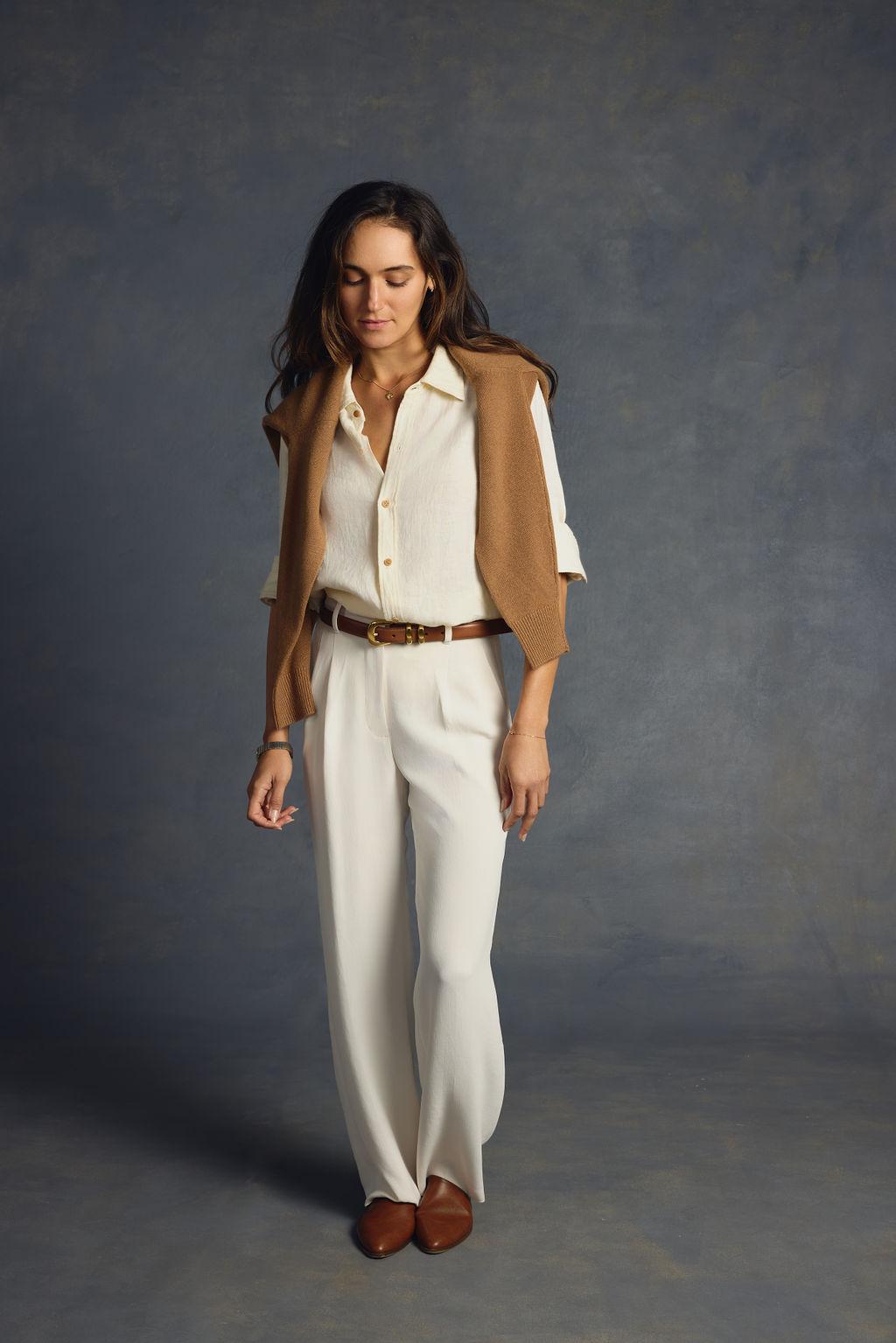
References
- U.S. Environmental Protection Agency (2018). Textiles: material-specific data (Facts and Figures about Materials, Waste and Recycling). epa.gov. epa.gov/facts-and-figures-about-materials-waste-and-recycling/textiles-material-specific-data Government source.
- Niinimäki, K., Peters, G., Dahlbo, H., Perry, P., Rissanen, T., & Gwilt, A. (2020). The environmental price of fast fashion. Nature Reviews Earth & Environment, 1, 189–200. doi.org/10.1038/s43017-020-0039-9
- Amaducci, S., Scordia, D., Liu, F. H., Zhang, Q., Guo, H., Testa, G., & Cosentino, S. L. (2015). Key cultivation techniques for hemp in Europe and China. Industrial Crops and Products, 68, 2–16. doi.org/10.1016/j.indcrop.2014.06.041
- Zimniewska, M. (2022). Hemp fibre properties and processing target textile: a review. Materials, 15(5), 1901. doi.org/10.3390/ma15051901
- Duque Schumacher, A. G., Pequito, S., & Pazour, J. (2020). Industrial hemp fiber: a sustainable and economical alternative to cotton. Journal of Cleaner Production, 268, 122180. doi.org/10.1016/j.jclepro.2020.122180
- Khan, B. A., Warner, P., & Wang, H. (2014). Antibacterial properties of hemp and other natural fibre plants: a review. BioResources, 9(2), 3642–3659. bioresources.cnr.ncsu.edu/resources/antibacterial-properties-of-hemp-and-other-natural-fibre-plants-a-review/
- De Falco, F., Di Pace, E., Cocca, M., & Avella, M. (2019). The contribution of washing processes of synthetic clothes to microplastic pollution. Scientific Reports, 9, 6633. doi.org/10.1038/s41598-019-43023-x
- Brüschweiler, B. J., & Merlot, C. (2017). Azo dyes in clothing textiles can be cleaved into a series of mutagenic aromatic amines which are not regulated yet. Regulatory Toxicology and Pharmacology, 88, 214–226. doi.org/10.1016/j.yrtph.2017.06.012
- State of California (2021). Senate Bill 62, Garment Worker Protection Act (Chapter 776, Statutes of 2021). California Legislative Information. leginfo.legislature.ca.gov/faces/billNavClient.xhtml?bill_id=202120220SB62 Government source.
- Sülar, V., & Devrim, G. (2019). Biodegradation behaviour of different textile fibres: visual, morphological, structural properties and soil analyses. Fibres & Textiles in Eastern Europe, 27(1), 100–111. doi.org/10.5604/01.3001.0012.7751