Order by Dec 15 for Christmas delivery

Why Hemp Softer with time, stronger by nature

Hemp is a strong, breathable natural fiber that grows softer with every wash.

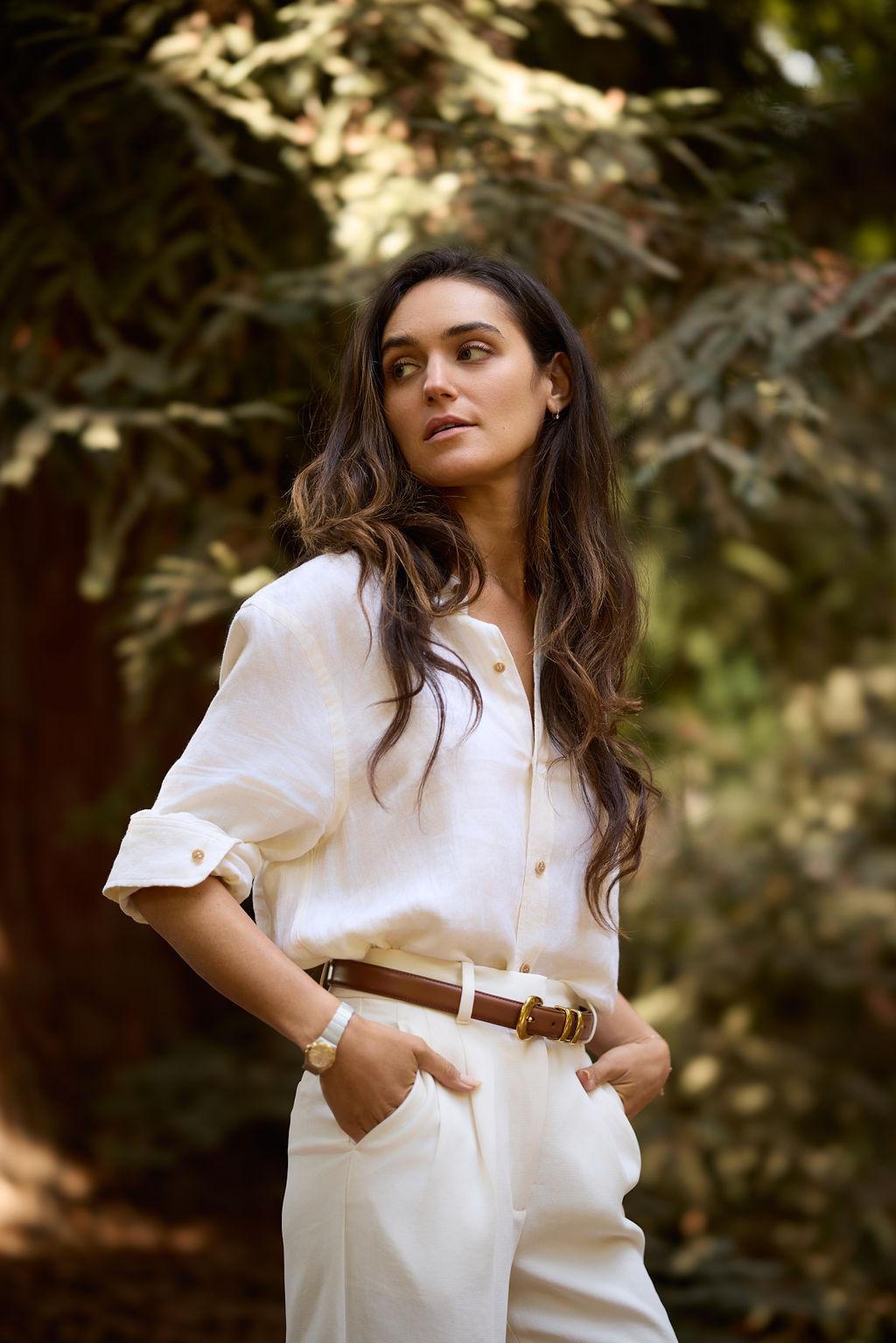
Seafarer Button-up in Butter Cream with the sleeves rolled, in a redwood forest

Sustainability

Our founder discovered the potential of hemp while taking textile engineering courses at North Carolina State University. What she learned changed everything, and became the foundation of our material choices today.

Hemp is a low-input crop,1 and farmers who grow it can reduce herbicide use and rotate it with other crops.2 A comparison of the two crops concluded that hemp is a more sustainable and economical fiber than cotton.3

Like every plant, hemp draws carbon dioxide from the air as it grows. Life-cycle studies of hemp yarn find that most of its environmental impact comes from processing the fiber into yarn, rather than from growing it.4

Our hemp is grown and woven in China, where hemp has been spun and woven for centuries. We sew every piece in California.

Hemp fabric is naturally

Temperature-regulating
Odor-resistant
UV-resistant

Benefits

Hemp once rigged ships. It made the sails, and the ropes that held them, because few natural fibers are as strong. Ours is woven light and soft, but it is the same fiber: its long bast fibers have high tensile strength,2 and the cloth softens with every wash while keeping its shape.

Hemp fibers absorb moisture readily,2 which keeps the cloth breathable and temperature-regulating through the day. Laboratory studies have found compounds in hemp fiber that inhibit the bacteria behind odor,5,2 and hemp fiber can create UV-resistant clothing.2 And at the end of its life, hemp is biodegradable.

Made with sensitive skin in mind: natural hemp fiber, azo-free dyes, and cotton thread and labels.

In short, hemp makes a cloth for year-round layering, season after season.

Hemp questions

Is hemp better than linen?

They feel alike: both are natural bast-fiber cloths that are crisp, breathable and cool to wear. Hemp starts with a slightly coarser texture, then softens with every wash while keeping its shape. If you love high-quality linen, you’ll feel right at home in hemp.

Is hemp more sustainable than cotton?

Hemp is a low-input crop, and farmers who grow it can reduce herbicide use and rotate it with other crops. A published comparison of the two crops concluded that hemp is a more sustainable and economical fiber than cotton. Most of hemp yarn’s environmental impact comes from processing the fiber, not from growing it.

Is hemp clothing good for hot weather?

Yes. Hemp fibers absorb moisture readily, so the cloth stays breathable and temperature-regulating through the day. It works for year-round layering.

Does hemp get softer?

Yes. Hemp softens with every wash. Its long fibers have high tensile strength, so it keeps its shape as it softens.

Can hemp clothing get you high?

No. Hemp clothing is woven from fibers in the stalk of the plant, and wearing it has no psychoactive effect.

Is Ofibera good for sensitive skin?

Ofibera is made with sensitive skin in mind: 100% hemp fabric, azo-free dyes, and cotton thread and labels, with nothing plastic against your skin.

Where is Ofibera clothing made?

Our hemp is grown and woven in China, where hemp has been spun and woven for centuries. Each piece is designed in Virginia and sewn in small runs in California.

Feel the difference.

If you love the feel of high-quality linen, you’ll feel right at home, and hemp only gets softer.

Shop the collection

References

  1. Amaducci, S., Scordia, D., Liu, F. H., Zhang, Q., Guo, H., Testa, G., & Cosentino, S. L. (2015). Key cultivation techniques for hemp in Europe and China. Industrial Crops and Products, 68, 2–16. doi.org/10.1016/j.indcrop.2014.06.041
  2. Zimniewska, M. (2022). Hemp fibre properties and processing target textile: a review. Materials, 15(5), 1901. doi.org/10.3390/ma15051901
  3. Duque Schumacher, A. G., Pequito, S., & Pazour, J. (2020). Industrial hemp fiber: a sustainable and economical alternative to cotton. Journal of Cleaner Production, 268, 122180. doi.org/10.1016/j.jclepro.2020.122180
  4. van der Werf, H. M. G., & Turunen, L. (2008). The environmental impacts of the production of hemp and flax textile yarn. Industrial Crops and Products, 27(1), 1–10. doi.org/10.1016/j.indcrop.2007.05.003
  5. Khan, B. A., Warner, P., & Wang, H. (2014). Antibacterial properties of hemp and other natural fibre plants: a review. BioResources, 9(2), 3642–3659. bioresources.cnr.ncsu.edu/resources/antibacterial-properties-of-hemp-and-other-natural-fibre-plants-a-review/